
Maritime & Offshore Injury Attorney
When an offshore accident changes everything, we fight for you. Choose the attorney who will fight for you when you need it most.
- Free Consultation
- No Fee Unless We Win







We Handle Maritime Cases Anywhere in Texas and the Gulf Coast.
Life on the water and on the rig is dangerous by nature, and when a company cuts corners on safety, training, or equipment, workers pay the price. If you or a loved one has been injured or killed in a maritime or offshore accident, you deserve real answers about what happened and real compensation for what you’ve lost.
Malley Law Firm represents seamen, oil rig workers, longshoremen, and their families across Texas and the Gulf Coast in claims involving vessel accidents, offshore oil rig explosions, and maritime wrongful death. We hold negligent employers and vessel owners accountable when they put profit ahead of worker safety.
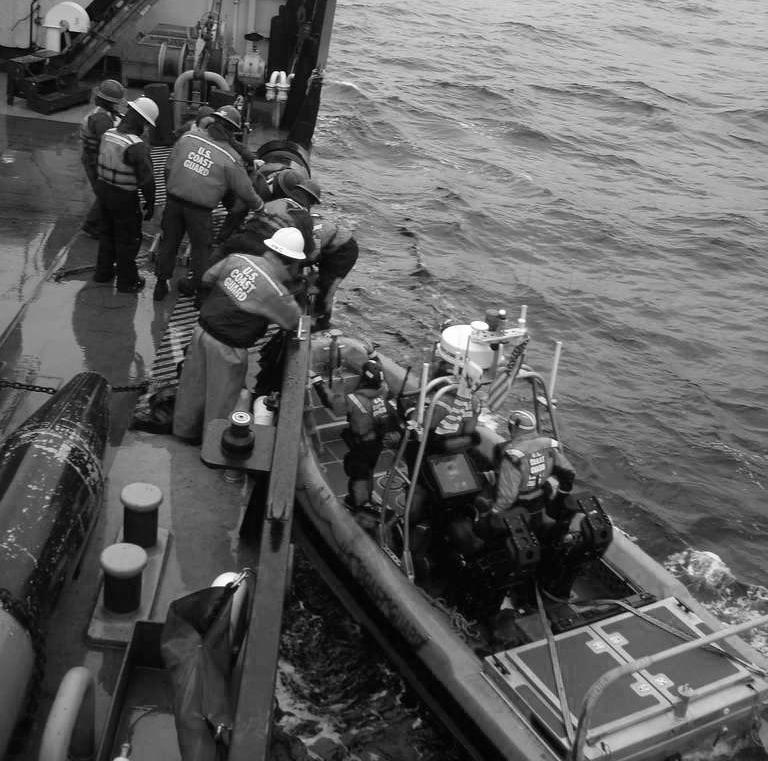
What to do When You Suffer a Maritime Injury
- Call Malley Law early. Maritime injury claims can turn on hitch schedules, incident reports, crew statements, maintenance logs, and radio or satellite communications. If you’re wondering how to bring a claim against a vessel owner or offshore employer, start by protecting the evidence before it disappears.
- Preserve every document. Keep your employment contract, pay stubs, safety training records, texts, emails, photos of the accident scene or injury, and anything the company has given you in writing. Do not assume the company’s own records will tell the full story.
- Get every explanation in writing. If the cause of the accident keeps shifting, the incident report doesn’t match what actually happened, or supervisors start dodging simple questions, document it. A maritime injury attorney can help identify what records should exist, and what’s conveniently missing.
- Do not sign anything. Companies and their insurance adjusters often show up fast with a “goodwill” check, a recorded statement request, or release paperwork. Signing early can limit or waive your right to full compensation before you even know the extent of your injuries.
- Do not let them soften it. Workers are often told it was just bad luck, their own mistake, or “part of the job.” Sometimes it’s a violation of safety regulations, unseaworthiness, negligent training, or equipment the company knew was faulty. Let us help before the company controls the story.
No FeeUnless We Win
Statewide Representation
$100+ MillionRecovered*
Understand Your Rights With Maritime Accidents
Maritime law, also called admiralty law, is the body of federal, state, and international law that governs injuries and disputes that happen on navigable waters: the high seas, the Gulf of Mexico, rivers, lakes, and offshore oil rigs. It is a distinct legal system from ordinary personal injury law, with its own courts, its own procedures, and its own set of federal statutes.
The U.S. Constitution gives federal courts jurisdiction over admiralty and maritime matters, and state courts can hear these cases only when they apply federal maritime law (with limited exceptions). Because the offshore oil and gas industry has grown so dramatically over the past several decades, thousands of workers now split their time between land and water and the type of recovery available after an injury depends heavily on where the accident happened, what kind of worker was injured, and which federal act applies.
That complexity is exactly why an experienced maritime attorney matters. The wrong claim under the wrong act can drastically limit, or even eliminate, the compensation a family is entitled to receive.
Maritime & Offshore Injury Cases We Handle
Jones Act Seaman Injuries
When the crew or the company put you in harm’s way.
Seamen face conditions no land-based job requires and when a captain’s order, a shortcut on the deck, or an untrained crewmate causes an injury, the Jones Act gives you the right to sue your employer directly. A maritime injury attorney can help establish seaman status, document the negligence, and preserve crew statements before stories start to change.
Longshore & Harbor Workers' Compensation Act (LHWCA) Claims
When a dockside injury gets treated like it doesn’t count.
Longshoremen and other harbor-based workers are often told their injury is “just a workers’ comp claim” and left to accept whatever the insurance carrier offers. The LHWCA provides real medical and wage-replacement benefits — but only if the claim is filed correctly and on time. We make sure your injury is documented and valued the way the law actually requires.
Offshore Oil Rig Explosions & Blowouts
When a well-control failure was preventable.
Blowouts and rig explosions rarely happen without warning signs, pressure readings ignored, maintenance deferred, or crews sent out without proper training. These cases move fast, with companies investigating themselves before an injured worker ever gets a lawyer. We move just as fast to secure inspection records, safety logs, and witness accounts before they disappear.
Death on the High Seas Act (DOHSA) Claims
When a loved one is lost more than 12 miles from shore.
DOHSA claims come with their own rules, their own damages, and their own strict timelines and they’re easy to get wrong without maritime-specific experience. A DOHSA attorney can help your family pursue the full financial recovery the law allows, from lost future earnings to loss of household support.
Outer Continental Shelf Lands Act (OCSLA) Claims
When the accident happened on a fixed platform, and jurisdiction gets complicated.
Injuries on fixed platforms on the Outer Continental Shelf sit in a gray zone between federal and state law, and getting the jurisdiction wrong can derail a claim before it starts. We identify which law (federal, adjacent-state, or both) applies to your injury, so your claim is filed the right way the first time.
Tugboat, Crew Boat & Vessel Collision Accidents
When two vessels, or a vessel and a fixed structure, should never have collided.
Allisions and collisions are almost always traceable to a specific failure: a missed radio call, an unlicensed operator, poor visibility procedures, or fatigue. We work to obtain vessel logs, radar and AIS data, and crew records before a company’s legal team has a chance to control the narrative.
Equipment Failure & Negligent Operation
When broken or poorly maintained equipment was the real cause.
A frayed line, a malfunctioning crane, or a piece of gear that was flagged for repair and never fixed can turn a routine task into a catastrophic injury. We work with maritime and engineering experts to trace the failure back to a maintenance record, a purchase order, or a decision someone made to keep equipment running past its limits.
Burn, Crush & Catastrophic Injuries
When the injury changes the rest of your life.
Rig floors, engine rooms, and deck operations produce some of the most severe injuries in any industry — burns, amputations, crush injuries, and traumatic brain injuries among them. These cases require a full accounting of long-term medical care, lost earning capacity, and the toll on your family, not just the initial hospital bill.
Unseaworthiness Claims
When the vessel itself, not just the crew, wasn’t safe.
A vessel owner has an absolute duty to provide a ship, its gear, and its crew that are reasonably fit for the job. When that duty is breached, through defective equipment, an incompetent crew, or unsafe conditions, an unseaworthiness claim can exist even without proving traditional negligence. We identify when this stronger theory of liability applies to your case.
Maritime Wrongful Death
When a family is left to pick up the pieces.
The loss of a seaman, rig worker, or passenger offshore leaves a family without an income, without a spouse or parent, and often without clear answers about what happened. We handle the investigation and the legal complexity so your family can focus on grieving, while we pursue the accountability and compensation your loved one’s death deserves.
What You Need to Know About Maritime Accidents and Injuries
- What is a “seaman” under maritime law?
A seaman is a worker who spends a significant part of their job, generally at least 30 percent of their working time, under the U.S. Supreme Court’s standard, in service of a vessel on navigable waters. Seamen bring injury claims under the Jones Act, which allows them to sue their employer for the negligence of the crew, captain, or vessel owner, and, unlike many other federal maritime acts, allows the claim to be filed in state court with a jury trial. - What is a longshoreman, and how is a longshoreman’s claim different from a seaman’s?
A longshoreman (sometimes called a stevedore) is a waterfront worker responsible for loading and unloading vessels, inspecting cargo, and related dockside work. Because longshoremen generally aren’t considered “seamen,” their injury claims typically fall under the Longshore and Harbor Workers’ Compensation Act (LHWCA) rather than the Jones Act. The LHWCA provides medical benefits, ongoing wage-replacement payments, and death benefits (including funeral expenses) to eligible workers and their families. - What is the Death on the High Seas Act (DOHSA)?
DOHSA is a federal law, first enacted in 1920, that allows the family of a seaman or worker killed more than 12 nautical miles off the U.S. coast to recover financial damages, including lost future earnings, loss of household services, and funeral expenses, for a death caused by negligence or an unseaworthy vessel. DOHSA has since been expanded to also cover certain commercial aviation accidents that occur over the high seas. - What is the Limitation of Liability Act, and how can it affect my claim?
The Limitation of Liability Act, dating back to 1851, allows a vessel owner to try to cap its liability for an accident at the current value of the vessel and its freight — but only if the owner didn’t have knowledge of the problem that caused the injury before the accident happened. Courts have found that this “knowledge” can include what the company’s shore-based management knew, not just the crew on board. This Act has been used to try to limit recovery in some of the largest maritime disasters, which is why it’s critical to have an attorney who can investigate what the company actually knew. - What is the Outer Continental Shelf Lands Act (OCSLA)?
OCSLA extends federal law to the seabed and fixed platforms on the Outer Continental Shelf; generally the area beyond a state’s coastal waters out to 200 (and in some cases up to 350) nautical miles. It also allows the adjacent state’s civil and criminal laws to apply as “surrogate” federal law for incidents on those structures. Because jurisdiction gets complicated the farther offshore an accident occurs, OCSLA claims almost always require an attorney experienced in both federal maritime law and the applicable state law.
What Clients Say
The Attorney Who Will Fight For You When You Need It Most.
Free consultation. No fee unless we win. Let Malley Law find the truth of the matter and get you what you truly deserve.
Talk to Tony
Tell us what happened. We’ll review your case and call you back. No obligation.
100% Free Consultation · No Fee Unless We Win